


How to Get a Crypto Card for Payments
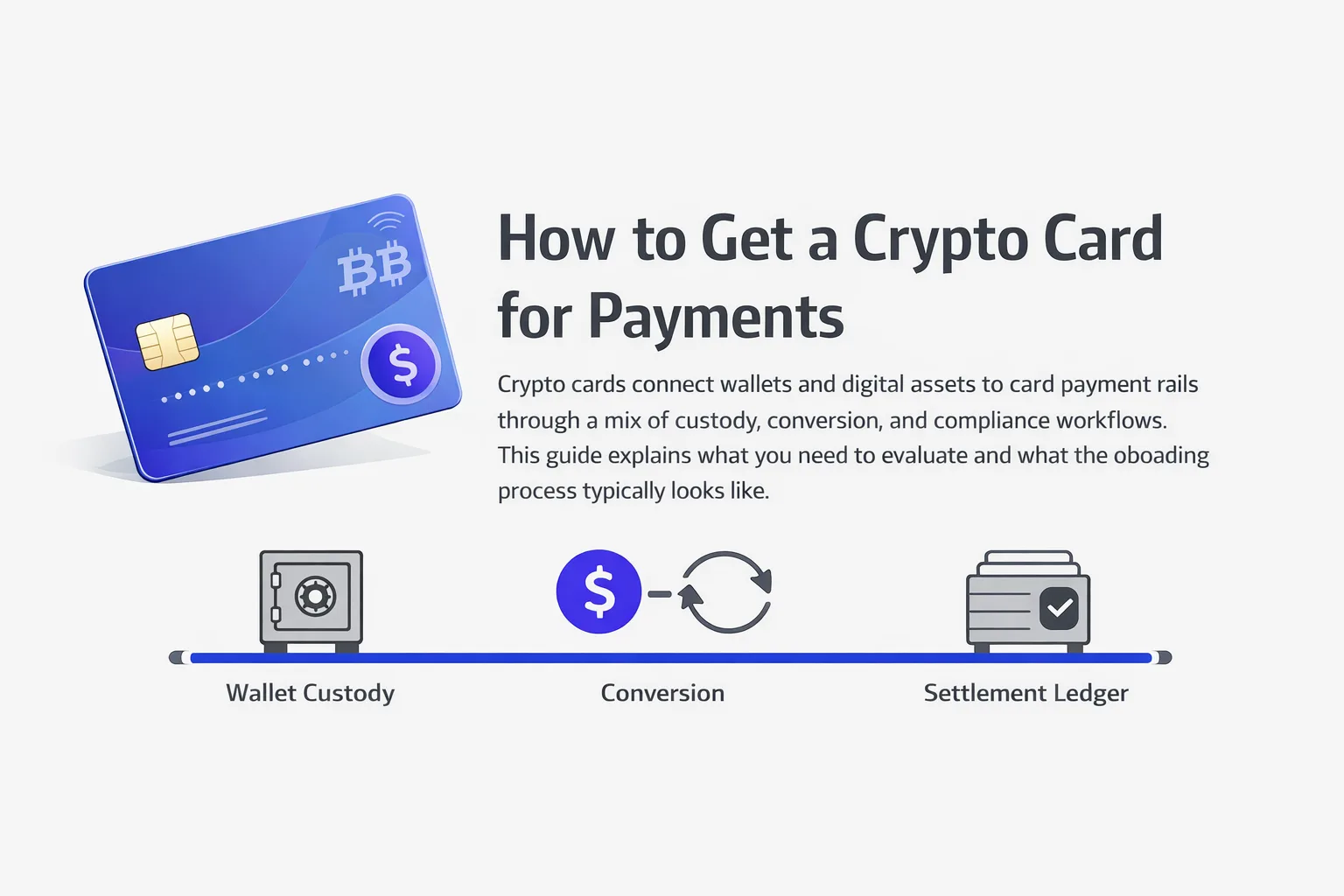
Crypto cards connect wallets and digital assets to card payment rails through a mix of custody, conversion, and compliance workflows. This guide explains what you need to evaluate and what the onboarding process typically looks like.

What a crypto card is in payment terms
A crypto card is a card product that lets you initiate purchases on traditional card payment rails while funding the transaction from crypto or stablecoin balances. The card network acceptance looks familiar to merchants, but the funding and settlement mechanics depend on how the provider holds assets, converts value, and routes funds.
In practice, the “crypto” part usually happens before or during authorization, when the provider ensures there is enough value available to cover the purchase. Providers differ in whether they pre-fund a card account, convert at the point of sale, or maintain a separate ledger that supports authorization decisions.
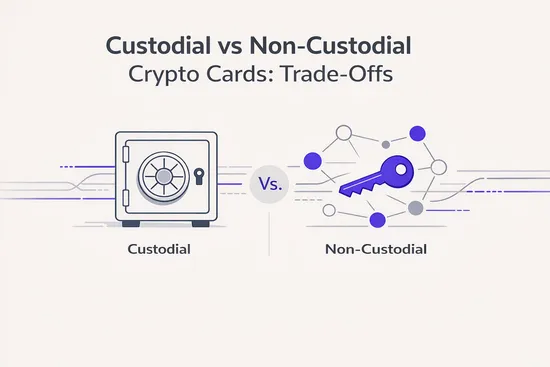
Choose a card model: custodial vs non-custodial
Most crypto cards are custodial, meaning the card provider or its partners custody your assets or maintain the balances used for spending. This model can simplify authorizations and reversals because the provider controls the balances and can manage disputes and refunds using internal ledgers.
Some offerings emphasize non-custodial workflows, where you retain control of assets in a self-custody wallet and interact through signing and permissions. Even then, the card transaction itself typically relies on an intermediary account layer because card networks require a regulated issuer to approve authorizations and manage chargeback processes.
When evaluating custody, focus on where the spendable balance actually lives at the time of purchase: on-chain in your wallet, in a provider-managed ledger, or in a regulated account structure. The closer the model is to traditional card issuance, the more likely it is that your “card balance” is effectively an off-chain account that may be funded from on-chain sources.
Check availability and eligibility early
Crypto card availability is heavily jurisdiction-dependent because card issuance, e-money frameworks, and virtual asset regulations vary by country and sometimes by state or region. A provider may support a wallet in many countries but only issue cards in a smaller subset due to licensing and banking partnerships.
Eligibility often depends on identity verification and residency checks, and requirements vary by provider and jurisdiction. Even if you already use a crypto exchange or wallet, card programs commonly require separate onboarding because the card issuer must meet card scheme and regulatory obligations.
Understand the onboarding and KYC workflow
Getting a crypto card typically involves creating an account with the card program operator, completing identity verification, and passing screening checks. These checks can include sanctions screening and other compliance controls required by issuing banks and payment networks.
Some providers support multiple KYC tiers that affect features like spending limits or funding methods, while others require a single level of verification for all cardholders. Differences exist across providers, so it is important to understand what verification level is required for the card specifically, not just for the associated app.
Funding the card: crypto, stablecoins, and fiat balances
After approval, you usually need to fund a spendable balance that the card can draw from. Funding sources can include crypto deposits, stablecoin deposits, bank transfers, or card-to-card top-ups, depending on the provider’s supported rails and compliance posture.
Stablecoins are commonly used as a spending balance because they reduce exposure to price volatility between funding and purchase. Providers differ in which stablecoins they support and whether balances are held in a dedicated account, a pooled custody structure, or represented as internal ledger balances backed by custody.
Wallet integration matters because the “wallet” in the app may be a custodial wallet, a self-custody wallet connector, or a hybrid setup with separate addresses per user. The funding experience and confirmation times depend on the supported blockchains, network congestion, and how the provider credits deposits after on-chain confirmations.
How authorization and conversion work at checkout
At the point of sale, the merchant sends an authorization request through the card network to the card issuer. The issuer or program manager decides whether to approve based on available balance, risk controls, and program rules, similar to traditional debit or prepaid products.
If your balance is in crypto, the provider may convert value to fiat at authorization time or may require you to hold a fiat or stablecoin balance that behaves like fiat for authorization decisions. Conversion may occur through the provider’s internal liquidity, through an exchange partner, or through a combination of routing and hedging mechanisms.
Because card rails settle in fiat currencies, a key practical question is where FX and crypto-to-fiat conversion happens in the flow. Providers differ in timing and counterparties, which can affect spreads, rates at authorization versus clearing, and how refunds are handled.
Settlement, refunds, and chargebacks
Card payments have a lifecycle that includes authorization, clearing, and settlement, and crypto card programs must map that lifecycle onto their funding and custody structure. Even when deposits are on-chain, the card transaction itself is reconciled off-chain through issuer and network processes.
Refunds and chargebacks are managed through the card ecosystem, and providers may credit refunds to a fiat balance, a stablecoin balance, or a program ledger based on their policies. Differences exist across providers, and refund timing can vary because it depends on merchant processing and card network workflows.
Fees, spreads, and limits that shape real costs
Crypto card costs are not limited to visible card fees, because conversion spreads and FX pricing can materially affect the effective cost of spending. Pay attention to where rates are set and whether pricing is determined at authorization time, at settlement time, or through a blended approach.
Limits can apply to deposits, withdrawals, ATM usage, and daily spending, and they may be influenced by your verification level and jurisdiction. Limits also interact with risk controls, so even verified users may see temporary restrictions based on transaction patterns.
Practical checks before you rely on a crypto card
Confirm which assets and blockchains are supported for funding and whether the card can spend directly from those balances or requires conversion into a specific spending account. This determines whether you can manage exposure using stablecoin payments or whether you are effectively operating a crypto-to-fiat conversion flow on every purchase.
Review how the provider describes custody, account segregation, and access controls, because these affect operational risk and recovery processes. Also confirm the support model for lost cards, disputed transactions, and compliance-related account reviews, since card programs must follow issuer rules even when funded by digital assets.
A crypto card is most predictable when you understand the full stack: wallet and custody model, funding rails, authorization logic, conversion and FX mechanics, and settlement obligations on card payment rails. Once those pieces are clear, “getting a card” becomes a straightforward process of eligibility, verification, and funding, with ongoing costs driven by infrastructure choices rather than marketing claims.